
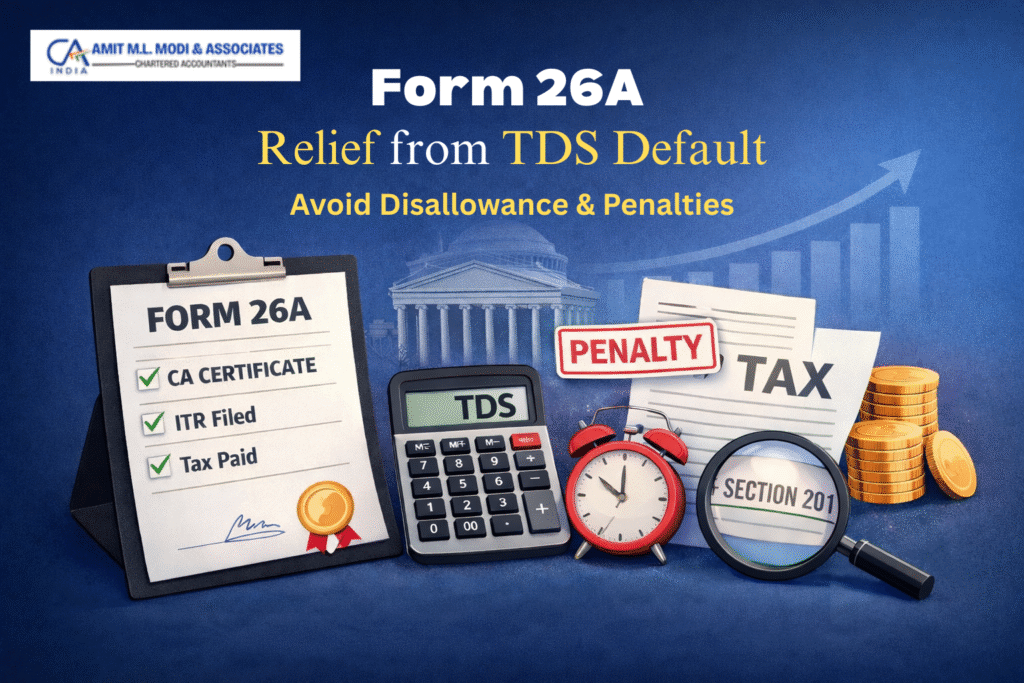
The Income Tax Act, 1961 has made it compulsory for the Tax Deducted at Source (TDS) to be deducted on specified items of expenditure under Part B of Chapter XVII. In the same vein, Tax Collected at Source (TCS) has to be collected on certain receipts as per Part BB of Chapter XVII.
However, in everyday situations, assessees may forget to deduct TDS or collect TCS while incurring expenses or at the time of recording transactions liable for such compliance. This negligence can lead to the situation where the assessee will be exposed to the risk of tax liabilities.
Implications of Non, Deduction of TDS
If an assessee does not deduct TDS, he/she will be liable to the following adverse effects:
1. Non, resident payments: 100% disallowance of expenses under Section 40(a)(i)
2. Resident payments: 30% disallowance of expenses under Section 40(a)(ia)
3. Interest @ 1% per month on the amount of TDS not deducted
4. Penalty under Section 271C, equal to the amount of TDS not deducted
Such consequences may lead to a major increase in the tax cost and compliance burden for the businesses.
Form 26A Relief from TDS Default A Statutory Safeguard
The Income Tax Act extends a crucial opportunity for relief to TDS defaulters through the proviso to Section 201(1). An assessee can evade the label of assessee in default by meeting the stipulated conditions and submitting Form 26A.
Criteria to Get Form 26A Relief from TDS Default
The criteria to avail relief through Form 26A are that:
The payee has filed the Income Tax Return as per Section 139The income received from the assessee is disclosed in such ITRThe payee has paid the tax due on such incomeA certificate in Form 26A, signed by a Chartered Accountant, is produced as is the requirement of Rule 31ACBAfter fulfilling these criteria, the assessee is entitled to relief from TDS default via Form 26A.
Advantages of Raising Form 26A
The main reliefs obtained by filing Form 26A are:
There will be no disallowance of expenses under Section 40(a)(i) or 40(a)(ia)There will be no penalty under Section 271COnly the interest under Section 201(1A) from the date payment is made to the date of filing of return by the payee is leviedTherefore, although there is still a liability to pay interest, it is in fact that the most severe consequences of TDS default are effectively neutralised.
Conclusion
TDS non, deduction is something that can happen even to the most careful businesses. Relief under Form 26A in such cases is a blessing in reserving the compliance status of such businesses. However, the tax should ultimately have reached the government through the payee. To avail this relief, proper documentation, timely filing and certification by a Chartered Accountant are the must, haves.
For sure, professional guidance will ensure that your compliance will be error, free and at the same time you will be maximising your statutory benefits. Our team at amitmlmodi is always ready to guide businesses through their TDS default situations, getting payees onboard, and filing Form 26A certification without a glitch. We are committed to helping our clients stay compliant and at the same time, minimise their tax exposures. Follow us on LinkedIn